Halloween Party Playlist: Four Phases from Spooky to Dance Floor
Build a Halloween party playlist that keeps energy up all night: four phases, real songs, pacing rules and a fair comparison of tools for shared playlists.
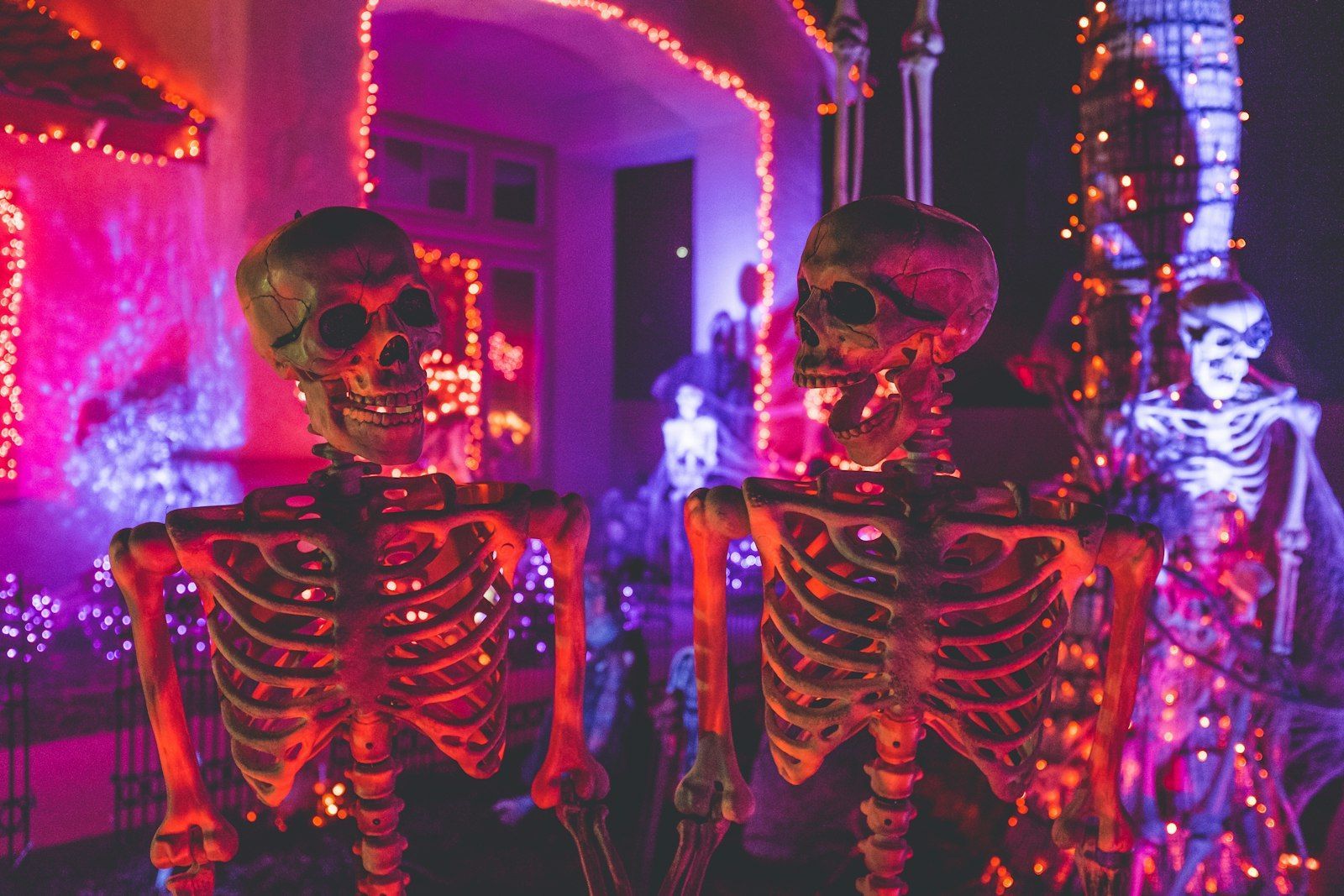


In October 1962, a novelty record about a mad scientist's dance craze climbed to number one on the Billboard Hot 100 just in time for Halloween. More than six decades later, "Monster Mash" still opens more spooky playlists than almost any other song, which tells you something: Halloween music is one of the few party genres where the audience expects the clichés. The trick is to deliver them in an order that keeps a room moving instead of turning the night into a joke you have heard four times by 9 p.m.
This guide builds a Halloween party playlist in four phases, with real songs for each, rules for pacing and a fair look at the tools you can use to build it together with your guests.
Why Halloween playlists go wrong
Most Halloween playlists are one of two failures. The first is the pure novelty list: three hours of "Monster Mash," "Thriller," "Ghostbusters" and sound-effect tracks. It is fun for twenty minutes and exhausting after that, because the songs share almost no musical variety and a lot of them are slow or mid-tempo.
The second failure is the opposite: a normal party playlist with one "Thriller" dropped in at midnight. Guests in costume want the theme acknowledged from the first minute, and a generic list makes the costumes feel like the only reason to be there.
The fix is to treat spookiness as a flavor, not a genre. Use the theme for the first and last quarter of the night, and let the middle run on songs that are dark in mood, minor in key or witchy in lyrics but still built for dancing.
Know your classics (and their real history)
A few facts help you place the big songs correctly.
- "Monster Mash" by Bobby "Boris" Pickett and the Crypt-Kickers was released in August 1962 and reached number one in the week of October 20, according to History.com. It re-entered the Hot 100 in 1970 and 1973, as documented on Wikipedia. It is a seasonal evergreen in the truest sense.
- "Ghostbusters" by Ray Parker Jr. hit number one on the Hot 100 on August 11, 1984 and stayed there for three weeks (Wikipedia). It was a summer hit first, a Halloween staple later.
- "Thriller" by Michael Jackson peaked at number four on the Hot 100 during its 1984 run and spent 22 weeks on the chart, per Billboard's ranking of the biggest Halloween songs. Its fame is cultural more than statistical: the music video turned it into a ritual.
None of this changes what to play, but it helps you know which songs guests of different ages will recognize instantly. A 60-year-old connects with "Monster Mash" on the first bar, a 30-year-old with "This Is Halloween" from the 1993 film The Nightmare Before Christmas, and a teenager probably with Billie Eilish.
The four-phase Halloween playlist
Think in phases of roughly 45 to 60 minutes each. The energy rises, peaks and then lands softly, which is exactly how a good dance floor session works anywhere else.
Phase 1: Arrival and costumes (first 45 minutes)
People are still hanging coats, showing off outfits and eating. You want mid-tempo, playful, recognizable songs at low to moderate volume so guests can talk.
- Bobby "Boris" Pickett, "Monster Mash"
- Rockwell, "Somebody's Watching Me"
- Screamin' Jay Hawkins, "I Put a Spell on You"
- Dusty Springfield or The Classics IV, "Spooky"
- Danny Elfman and cast, "This Is Halloween"
- Ray Parker Jr., "Ghostbusters"
This is where the novelty songs belong. They work as icebreakers because everyone sings along, and singing along is the quickest way to make strangers in costume feel like a group. Spend the best ones early, while people are still delighted by the theme, instead of saving them for later when they compete with real dance songs.
Phase 2: The turn (next 45 minutes)
Now you move from theme songs to dark-flavored dance music. Keep the spooky imagery in the lyrics or sound but increase the tempo and bass.
- Michael Jackson, "Thriller" (a strong bridge because it is both theme and groove)
- Stevie Wonder, "Superstition"
- Rihanna, "Disturbia"
- Santana, "Black Magic Woman" (the dance-friendlier take on the Fleetwood Mac original)
- Britney Spears, "Toxic"
- Billie Eilish, "bad guy"
The point is continuity: a guest who hears "Thriller" should stay on the floor for "Superstition," because the bass line carries over even though the theme fades. If you want this phase to blend seamlessly, check the keys and tempos, as described in our harmonic mixing guide.
Phase 3: The peak (next 60 minutes)
This is the part where the costumes stop mattering and the party takes over. Drop the pure Halloween songs and play the biggest dance-floor songs you have, with a handful of darker cuts mixed in for flavor: Rob Zombie's "Dragula," Marilyn Manson's "The Beautiful People," Depeche Mode's "Personal Jesus," The Cure's "Lullaby" for a cooldown track or Gorillaz's "Feel Good Inc." for a hip-hop-tinged groove.
Mix generations here. Alternate a 1980s track with a 2010s one, and avoid more than two songs in a row from the same decade. Our wedding reception timeline uses the same principle, and it works at any party with a wide age range.
Phase 4: The landing (last 30 minutes)
End the night with something that gives people a reason to leave happy. A big sing-along such as "Time Warp" from The Rocky Horror Picture Show is a cult favorite, and it is literally choreographed. Follow it with slower, moody tracks like Radiohead's "Creep" or Lana Del Rey's "Summertime Sadness" and then fade out with a calm instrumental or a single piano piece.
Seven rules that make it work
- Keep novelty songs under 25% of the total. They are seasoning, not the meal.
- Never play two sound-effect tracks back to back. Creaking doors and howls are great as a 20-second intro, terrible as a track.
- Check explicit lyrics if kids are around. Many dark-themed songs include language that is fine at 11 p.m. and not at 5 p.m.
- Make a separate "kids' hour" list. Early trick-or-treat groups want "This Is Halloween," "Monster Mash" and "Ghostbusters" on loop. You can then switch the playlist when the little ones go home.
- Balance genres. Pop, rock, hip-hop, goth, funk and film themes all contain songs with dark imagery. Variety keeps different friend groups engaged.
- Use crossfade or a 3 to 5 second overlap. Silence between songs breaks the spell, especially in a dim room.
- Have a backup list of 15 safe songs. If the mood drops, you can fall back on proven crowd-pleasers.
Build it together: tools worth comparing
A Halloween party has an advantage over a wedding: everyone has an opinion, and they all want their favorite spooky song in the mix. Letting guests add tracks before the night avoids stressful live requests, which we cover in Party Song Requests: 6 Ways to Handle Them Gracefully. Here is how the main options compare for this particular use case.
| Tool | Best for | Honest limits |
|---|---|---|
| Spotify collaborative playlists | Groups where everyone already has Spotify | Works best when everyone uses the same service |
| YouTube Music or YouTube playlists | Mixing official tracks with live versions, movie scenes and fan edits | Playback and queue behavior varies between audio and video versions |
| Apple Music shared playlists | Groups that all use Apple devices | Works best when everyone is in Apple's ecosystem |
| Mixider | Mixing YouTube, SoundCloud, Bandcamp, Mixcloud and other sources in one shared playlist, with group voting and an AI generator for a vibe like "dark synth party" | Does not host music itself and does not include Spotify or Apple Music tracks; see pricing for the free plan and paid options |
Which one wins depends on your guests. If everyone is on the same streaming service, its built-in collaborative playlist is the simplest answer. If your friends use different services, or you want the weird remix someone found on SoundCloud next to the original on YouTube, a cross-platform playlist is easier. For a deeper comparison, read Collaborative Playlists: Which App Fits Your Group.
A quick sequencing example
Here is a sample first hour so you can see the pacing in practice, with energy rated from 1 (low) to 5 (peak).
| Minute | Song | Energy |
|---|---|---|
| 0 | Danny Elfman, "This Is Halloween" | 3 |
| 4 | Bobby "Boris" Pickett, "Monster Mash" | 2 |
| 7 | Rockwell, "Somebody's Watching Me" | 3 |
| 11 | Screamin' Jay Hawkins, "I Put a Spell on You" | 2 |
| 14 | Ray Parker Jr., "Ghostbusters" | 3 |
| 18 | Michael Jackson, "Thriller" | 4 |
| 24 | Stevie Wonder, "Superstition" | 4 |
| 28 | Rihanna, "Disturbia" | 4 |
Notice the small dips at "Monster Mash" and "I Put a Spell on You." Those dips give guests a moment to talk, refill drinks and admire each other's costumes. Without them, an hour of high energy would tire the room before the peak phase even begins.
What to do before Saturday night
Halloween falls on a Saturday this year, so you have two days. Start with a single list of 60 songs, which covers about four hours. Mark each track as theme, dark dance, peak or landing. Share the link with two or three friends and ask each to add five songs, then delete anything that breaks the 25% novelty rule. Finally, play the first and last ten minutes at home at party volume, so you know the transitions work before the doorbell rings.
Build your next playlist with Mixider
Mix YouTube, YouTube Music, SoundCloud, Bandcamp, Audius and more in one shared playlist, and let your friends add their picks.
Try Mixider for free