Dembow Explained: The Rhythm Behind Reggaeton
How the dembow beat works, where it came from in Jamaica, Panama and Puerto Rico, and how to use its 3+3+2 groove in playlists and video edits.



Play the first two seconds of "Gasolina" and a whole room knows what is coming. Before a single word is rapped, the drums have already told you: a steady thump under everything, then a snapping accent that lands just a little off where your foot expects it. That small pattern is called dembow, and it has travelled from Kingston dancehall studios to Panama City, Long Island, San Juan and finally the top of the Billboard Hot 100.
This guide explains what the dembow rhythm actually is, where it came from, why it works on a dance floor, and how to hear (and use) it as a listener, a playlist builder or a video editor.
What dembow actually is
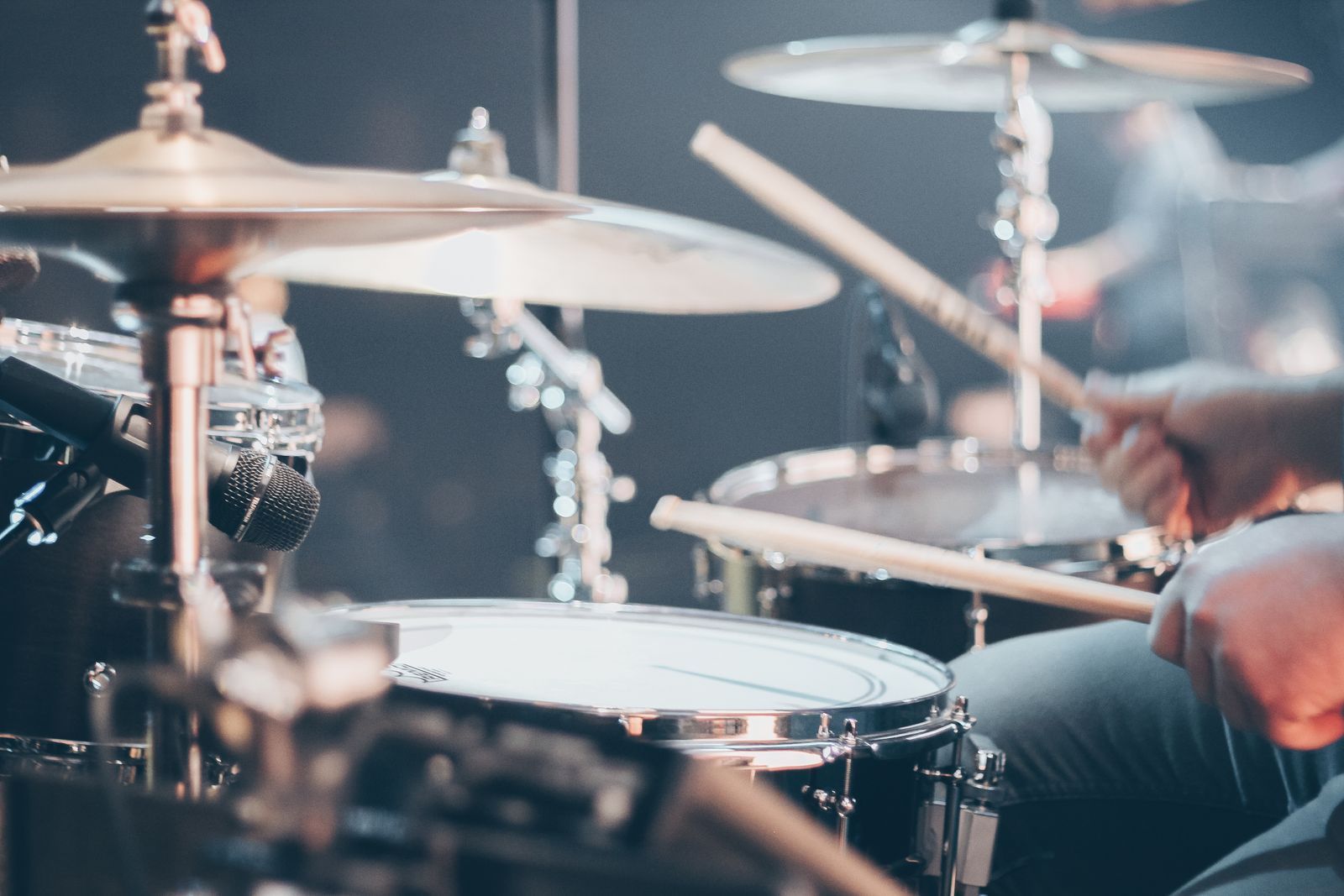
Dembow is a drum pattern, not a genre. It repeats every bar, usually at a tempo in the region of 90 to 100 BPM in reggaeton, and it is built from two layers.
- The foundation: a kick drum on every quarter note (four hits per bar). It never stops, which gives the groove its relentless forward push.
- The accents: snare, rim or clap hits that fall in a 3+3+2 grouping across the eight eighth notes of the bar. If you count the bar as "1 and 2 and 3 and 4 and", the snare lands on the "and" of 2 and again on beat 4, and the pattern wraps around to the downbeat.
The 3+3+2 shape is the secret. Our ears expect an even split of eight into 4+4. Dembow breaks it into three, three and two, so each accent arrives a little early or late compared with the steady kick. That tension between the straight pulse and the lopsided accents is what makes people move their hips instead of just nodding their heads.
If you want to feel it without any gear, count eight eighth notes out loud and clap on 1, 4 and 7 while tapping your foot on every other number. That is the shape underneath most reggaeton.
Dembow versus a standard pop beat
A typical pop or rock backbeat puts the snare on beats 2 and 4 and the kick on 1 and 3. It is stable, symmetrical and easy to predict. Dembow keeps a kick on every beat (closer to a house or disco foundation) but replaces the symmetrical snare with the syncopated 3+3+2 accent. The result sits in a different place: slower than most dance music, but with more rhythmic bounce than most pop.
The origin story: from Jamaica to Panama to New York
The history of dembow is a chain of reinterpretations, and sources do not agree on every link. What is well documented goes like this.
Kingston, 1989 and 1990
The pattern traces back to a riddim (the Jamaican word for an instrumental backing track that many singers record over) created by the production duo Steely & Clevie. It was first heard on Gregory Peck's instrumental "Poco Man Jam" in 1989, released as "Fish Market" in 1990, according to Scaruffi's history of reggaeton. Producer Bobby Digital then built Shabba Ranks' 1990 hit "Dem Bow" over that riddim. The song title is where the name "dembow" comes from.
Red Bull Music Academy's Dembow: A Loop History calls Shabba Ranks' record the "patient zero" of the rhythm. It also makes an important point: reggaeton producers rarely sampled that record directly.
Panama and Long Island
Jamaican dancehall was hugely popular in Panama, where artists such as Nando Boom and El General recorded reggae in Spanish. The loop that reggaeton relies on most, according to the same Red Bull article, was assembled in the early 1990s at Philip Smart's HC&F studio on Long Island, by a mix of Jamaican and Panamanian collaborators. It came from a track called "Dub Mix II," played by Dennis "The Menace" Thompson, and it became the Panamanian "Pounda." Wayne & Wax tells a similar story and notes that it started as an instrumental for Nando Boom's "Ellos Benia."
This is why you will read different "origin" claims. The Steely & Clevie riddim is the conceptual ancestor. The HC&F version is the actual loop that became the sample shared by countless Spanish-language records. Berklee's explainer on dembow lists 19 songs that feature the rhythm and is a good listening list if you want to hear the family tree in order.
Puerto Rico and the global breakout
From Panama the rhythm moved to Puerto Rico, where the underground scene of the 1990s mixed it with Spanish-language rap. Reggaeton took its name from that scene. It crossed into the mainstream in 2004 with Daddy Yankee's "Gasolina," the lead single of the album Barrio Fino. The album was the first reggaeton record to debut and peak at number one on the US Top Latin Albums chart, and the song's success led to the creation of a new radio format in the United States called Latin Rhythm Airplay (see the Daddy Yankee discography and biography on Wikipedia).
The pattern reached its widest audience with "Despacito" in 2017. Luis Fonsi and Daddy Yankee's song, in its remix with Justin Bieber, became the first mostly Spanish-language song to top the Billboard Hot 100 since 1996 and stayed there for 16 weeks, tying the record held by Mariah Carey and Boyz II Men's "One Sweet Day" (Gulf News).
Why it works on a dance floor
Dembow does three things that are useful to anyone choosing or editing music for people in motion.
- The kick on every beat makes it easy to lock in. A beginner can find the pulse in seconds, even in a loud room.
- The syncopation adds interest without confusion. The off-balance accents give dancers something to react to, so the groove does not feel like a metronome.
- The tempo leaves room. At 90 to 100 BPM there is space between the beats for body movement, for a vocal line in Spanish, for a rap verse or for a melodic hook. Faster club tempos leave less space, which is one reason reggaeton feels sensual and relaxed while still being danceable. For comparison, the dance-floor tempo discussed in Why 120 BPM Became the Dance Floor Tempo is noticeably faster.
There is a practical side effect for DJs and playlist builders: dembow is one of the rare rhythms that mixes well across genres. Because the kick is steady, a dembow track can sit next to a trap song, an afrobeats track or a half-time house record without the groove collapsing, as long as the tempos are reasonably close. Half-time and double-time relationships help here. A 95 BPM reggaeton track also sits comfortably next to many 100 BPM hip-hop records.
The sound design behind the rhythm
The pattern is only half of what you hear. The other half is the sounds chosen to play it.
- The kick is typically short, punchy and tuned low so it can carry through a club system. For the history of the drum machine behind many low-end sounds, see the Roland TR-808 deep dive.
- The snare or rim is bright, dry and often layered with a clap.
- The bass often follows the kick, with a long sine-like note that lets the track feel heavy even at low volume.
- Percussion fills such as snare rolls and tom hits mark the end of four-bar or eight-bar phrases.
Because the loop is so recognisable, the sampling history of dembow resembles that of other foundational drum loops. If you enjoy this kind of story, the Amen break is a parallel case of one short drum pattern shaping a whole family of genres.
How to spot dembow in the wild
Train your ear in three steps.
- Find the kick. Tap along to the steady, every-beat thump. If the kick is only on beats 1 and 3, you are probably not hearing dembow.
- Listen for the snare that arrives early. Count the eighth notes and listen for hits at 4 and 7. The "boom-ch, boom-ch-boom" feeling is often described by DJs as the signature.
- Check the tempo. If it sits in the 90 to 100 BPM range with that accent pattern, you have almost certainly found it.
Not every song that sounds Latin uses it. Salsa, bachata and cumbia have their own rhythms. Many modern pop-reggaeton crossovers soften or vary the pattern, and the Dominican genre called dembow (a faster, harder-edged style) uses the same name for a different tempo and feel, which can confuse searches and playlists.
Using dembow in your own playlists and videos
Here are concrete ways to use what you now know.
For playlists
- Build a tempo ladder. Start a party mix with 85 to 90 BPM tracks, move through the 95 to 100 BPM dembow core, then let the energy rise with songs around 105 to 110.
- Use it as a bridge. Put a dembow track between a hip-hop song and an afrobeats song at similar tempos. The steady kick keeps the room together while the style changes.
- Mind the lyrics and the room. Reggaeton lyrics can be explicit. For an office or family event, check the clean versions before you build the list.
For video
- Cut on the accent, not just the kick. Editors who cut only on the steady kick will make a montage that feels mechanical. Try placing cuts on the syncopated snare hits (the 4 and 7 positions) for energy, and keep the kick for camera movement or zooms.
- Match motion to the 3+3+2 shape. A three-three-two sequence of shots, or a three-three-two rhythm of text pops, will feel in sync even for viewers who cannot name the pattern. For deeper technique, see How to Cut Video on the Beat.
- Respect licensing. Reggaeton hits are protected like any other commercial music. If you plan to publish on social platforms, check the platform's licensed library or read Music Licensing for Video Creators.
Try this tonight
Pick one dembow-era track from each decade: Shabba Ranks' "Dem Bow" (1990), Daddy Yankee's "Gasolina" (2004) and "Despacito" (2017). Listen to each twice. The first time, follow only the kick. The second time, count to eight and clap on 1, 4 and 7. You will hear the same skeleton in three very different productions, and once you hear it, you will start noticing it in songs you have known for years. Then build a ten-song playlist ordered by tempo, add the three tracks as anchors, and see how the room responds.
Build your next playlist with Mixider
Mix YouTube, SoundCloud, Bandcamp and more in one shared playlist, and let your friends add their picks.
Try Mixider for free